What is lipedema?
A common, painful, and frequently missed fat disorder — and what it means for you.
- Researched against current medical guidelines
- Every claim sourced & linked to a named authority
- Independent — we don’t sell surgery
- Not a substitute for your doctor.
Lipedema is a chronic disorder in which painful, abnormal fat builds up symmetrically — usually in the hips, thighs, and lower legs, and often the arms — while sparing the hands and feet. It affects mostly women, resists diet and exercise, and is commonly mistaken for obesity or cellulite.
On this page
- Who gets lipedema and how common is it?
- What does lipedema feel like?
- Why is lipedema different from ordinary weight gain?
- What are the types of lipedema?
- What are the stages of lipedema?
- What causes lipedema?
- How is lipedema diagnosed?
- What helps with lipedema?
- Where does lipedema fat accumulate?
- Explore more about lipedema
Who gets lipedema and how common is it?
Lipedema almost always affects women and often begins or worsens with hormonal changes — puberty, pregnancy, or menopause. It's widely cited as affecting up to ~11% of women, but that estimate comes from specialist-clinic studies; the true population figure is uncertain. What's clear: it's common and badly under-diagnosed, taking around 17 years on average to identify. (Herbst et al., Phlebology 2021) (Aday et al., Vascular Medicine 2024)
You are not imagining it.
Lipedema is a real, recognized medical condition. The pain is not "just" being overweight. It's not your fault, and it doesn't go away with willpower alone.
What does lipedema feel like?
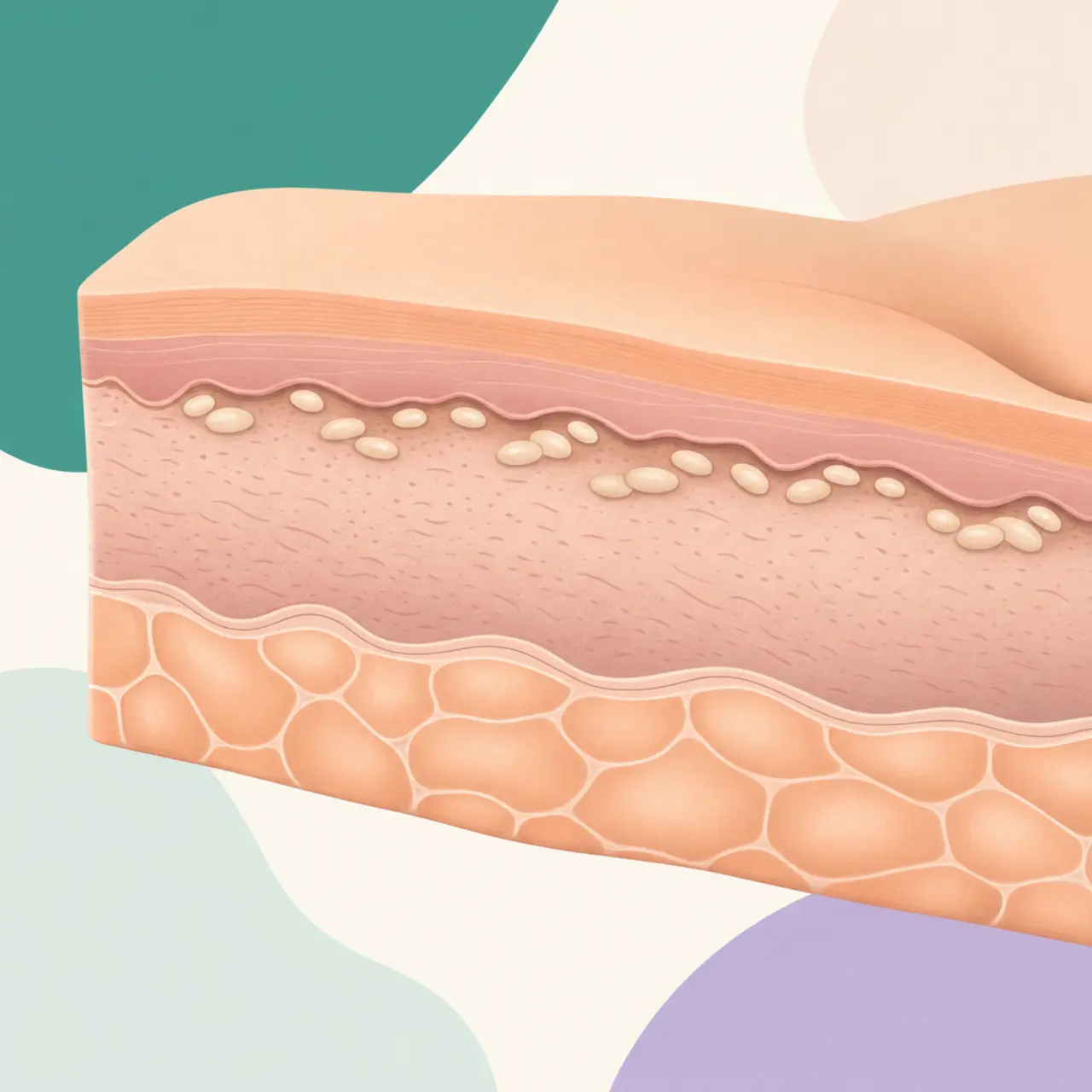
The hallmark of lipedema is fat that hurts. Unlike ordinary body fat, lipedema fat is tender to the touch, bruises at the slightest pressure, and creates a heavy, dragging sensation by the end of the day. Many people describe the texture beneath the skin as feeling like rice or small peas.
- Symmetrical, disproportionate fat on both sides of the body
- Pain, tenderness, and aching in the hips, thighs, and lower legs (and often arms)
- Easy bruising from minor bumps
- A nodular texture under the skin — "rice" or "peas"
- Heaviness and fatigue that worsens through the day
- Cuff sign: fat stops sharply at the ankle (or wrist), leaving the foot and hand normal-sized
- Fat that does not reduce with diet or exercise
- Swelling that improves overnight (unlike lymphedema, which does not)
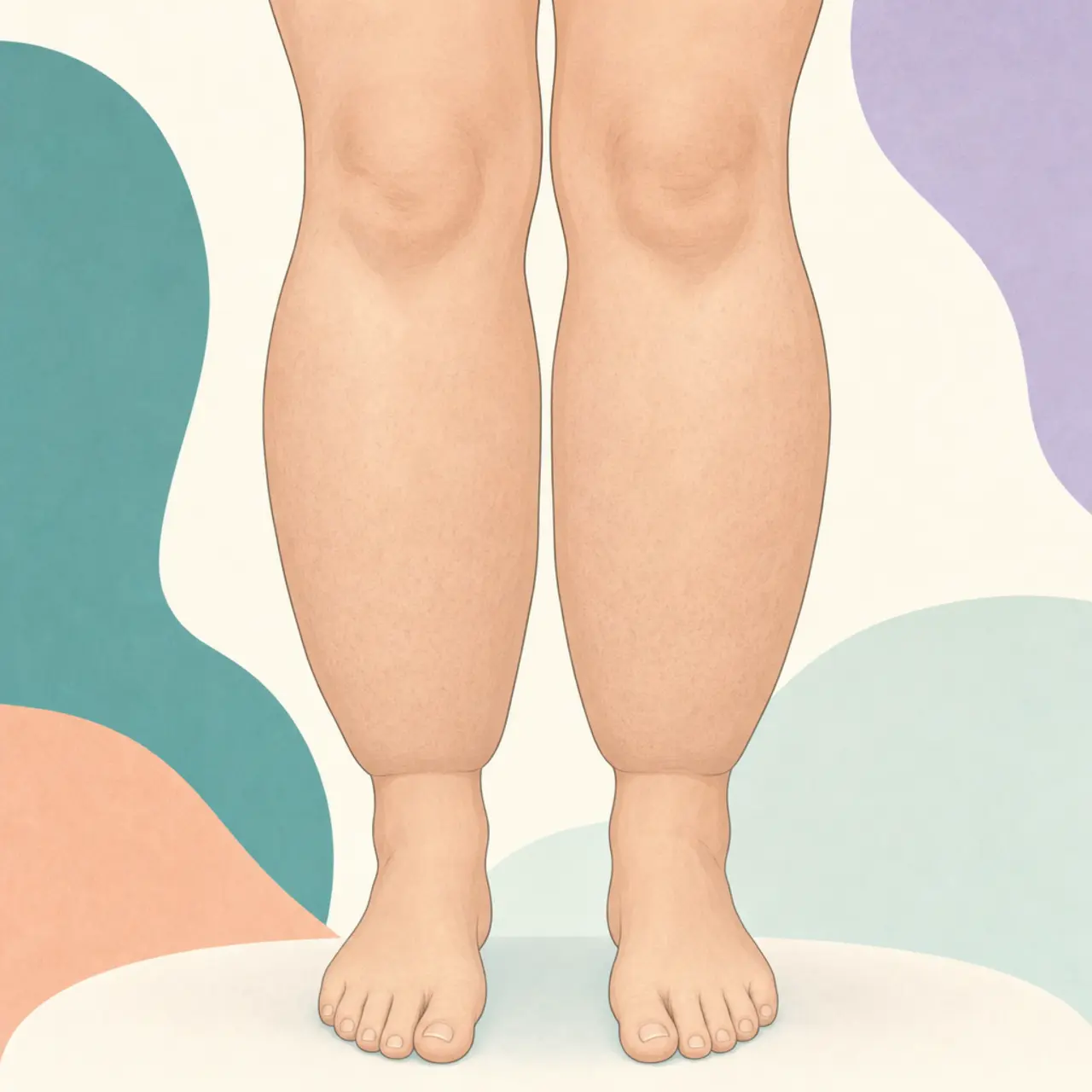
The cuff sign is one of the most recognizable features: there is a clear line where the swollen, fatty tissue ends and the normal ankle or foot begins — almost like a bracelet. (Aday et al. 2024)
Why is lipedema different from ordinary weight gain?
Unlike ordinary weight, lipedema fat is symmetrical, painful, and bruises easily — and it resists dieting. People with lipedema also tend to have a healthier metabolic profile (lower rates of diabetes and high blood pressure) than their body size suggests. (Aday et al., Vascular Medicine 2024)
| Feature | Lipedema fat | Ordinary weight gain |
|---|---|---|
| Symmetrical? | Yes — always both sides equally | Usually, but not always |
| Painful to touch? | Yes — a defining feature | No |
| Responds to diet? | No — lipedema fat resists | Yes |
| Affects hands/feet? | No — they stay smaller | Can affect whole body |
| Easy bruising? | Yes — classic sign | No |
What are the types of lipedema?
Lipedema is classified into five types (I–V) based on where the fat sits — not how severe it is. Most people have more than one type.
- 1 Type I: Hips and buttocks
- 2 Type II: Buttocks to the knees, often with inner-knee lobes
- 3 Type III: Buttocks to the ankles — the most common type
- 4 Type IV: Arms (nearly always alongside a leg type)
- 5 Type V: Lower legs only (lipolymphedema variant)
What are the stages of lipedema?
Lipedema progresses through three main stages — and some researchers now recognize intermediate stages 1.5 and 2.5 — based on the texture and structure of the tissue, not just the size. (Life 2025)
- 1 Stage 1: Skin surface is smooth; the tissue underneath is soft with fine nodules
- 2 Stage 2: Skin has an uneven, orange-peel or mattress texture; larger nodules form
- 3 Stage 3: Large, lobular overhangs of tissue at the hips, inner thighs, and knees
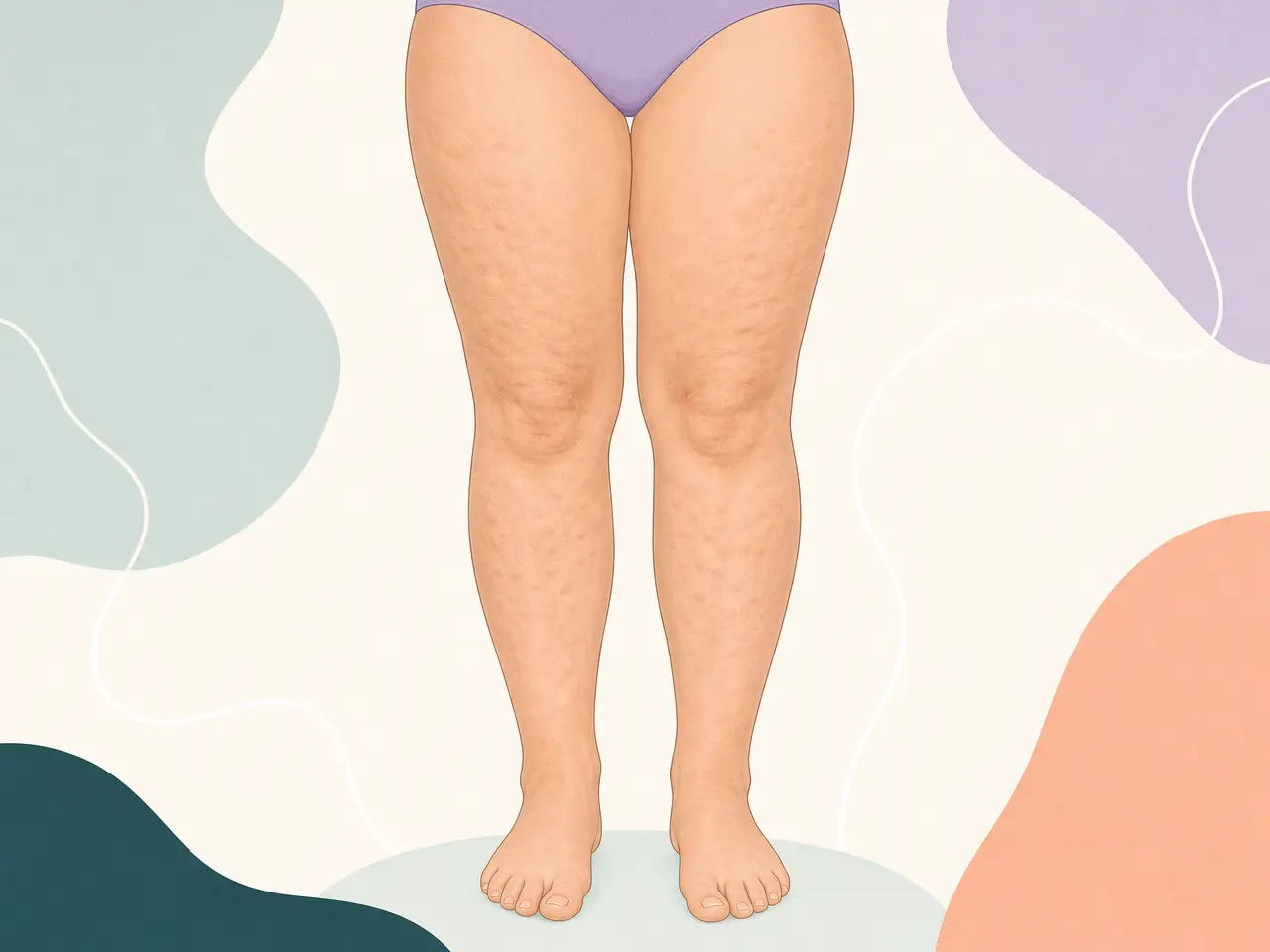
Staging is evolving.
The intermediate stages 1.5 and 2.5 are recognized in recent research but are not yet universally adopted. Your doctor may use the classic three-stage system.
What causes lipedema?
The exact cause of lipedema isn't fully understood, but research points to a combination of genetics, female hormones, and changes in fat and lymphatic tissue. Lipedema runs in families — roughly 60% of people report a family history — and it almost exclusively affects women, strongly implicating estrogen in its development. (Herbst et al. 2021)
- Family history — a genetic predisposition passed down through families
- Female sex hormones — lipedema typically starts or worsens at puberty, pregnancy, or menopause
- Changes in fat tissue — abnormal fat cell structure, fibrosis, and inflammation
- Microvascular and lymphatic changes — small blood vessels become leaky, and lymphatic drainage is impaired
How is lipedema diagnosed?
There is no single lab test or imaging study that diagnoses lipedema. Doctors diagnose it through a clinical exam — assessing the characteristic fat distribution, tenderness, easy bruising, and the cuff sign. Ruling out lymphedema (the Stemmer sign is negative in pure lipedema) and other causes of leg swelling is part of the process. (Delphi Consensus, Nature Communications 2026)
Still looking for answers?
Because lipedema is so often missed, many people spend years being told their weight is a lifestyle problem. If you recognize these symptoms, bring this page to your next appointment — or use our tool to prepare specific questions.
What helps with lipedema?
There is no cure for lipedema, but several treatments can reduce symptoms and slow progression. Conservative care — compression garments, manual lymphatic drainage (MLD), and low-impact exercise — is the first step. For more advanced cases, specialized liposuction can reduce the abnormal fat tissue. Newer GLP-1 medications are being explored in research but are not FDA-approved for lipedema.
Compression garments
Reduce swelling, ease pain, and support lymphatic flow.
Manual lymphatic drainage
Gentle massage technique to move fluid and reduce heaviness.
Exercise
Low-impact movement like walking, swimming, or cycling — focus is wellness, not weight loss.
Anti-inflammatory diet
May reduce pain and inflammation, though it does not remove lipedema fat.
Liposuction (surgery)
Removes abnormal fat tissue; can improve mobility and reduce pain long-term.
GLP-1 medications
Off-label, under investigation. May reduce inflammation and non-lipedema fat.
Where does lipedema fat accumulate?
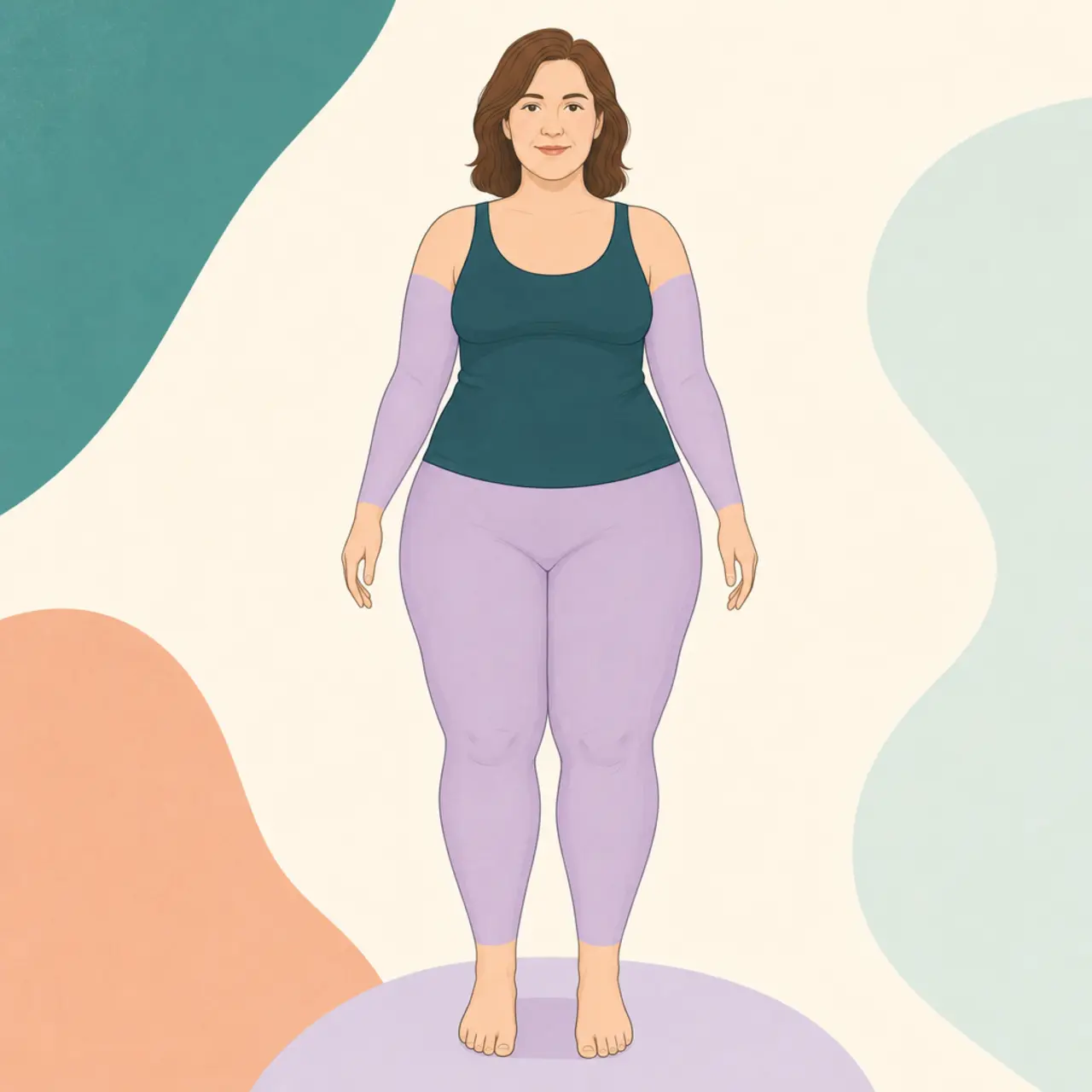
Lipedema fat is strikingly symmetrical — it affects the same areas on both sides of the body. The most commonly affected areas are the hips, thighs, and lower legs. Type IV also involves the arms. Crucially, the hands and feet are always spared — this is one of the key distinguishing features from lymphedema.
Sources
- Herbst KL et al. US Standard of Care for Lipedema — Phlebology 2021 journals.sagepub.com
- Aday AW et al. Lipedema survey — Vascular Medicine 2024 pmc.ncbi.nlm.nih.gov
- Delphi Consensus on Lipedema Diagnosis — Nature Communications 2026 nature.com
- 2025 Lipedema Staging Update — Life 2025 pmc.ncbi.nlm.nih.gov
- Lipedema Foundation — definitions and treatment overview lipedema.org
- NHS — Lipoedema nhs.uk