Eating and moving well with lipedema.
No diet cures lipedema — but the right food choices and movement can genuinely reduce pain and swelling.
- Researched against current medical guidelines
- Every claim sourced & linked to a named authority
- Independent — we don’t sell surgery
- Not a substitute for your doctor.
No diet cures lipedema or melts its fat, but anti-inflammatory eating can reduce pain and swelling, support overall weight, and help you feel better. The most-discussed approaches are anti-inflammatory, low-carb/keto, and the RAD diet. Gentle, low-impact exercise — especially in water — helps too.
On this page
How does food affect lipedema?
Lipedema fat is a structural, hormonal condition — it isn't caused by overeating and it doesn't disappear with dieting. What food can do is lower the chronic inflammation that drives pain and swelling, support healthy weight in the non-lipedema parts of your body, and reduce fluid retention. Think of nutrition as turning down the volume on your symptoms, not as a cure.
Inflammation, not fat burning
The goal of dietary change in lipedema is reducing systemic inflammation and fluid retention — not "melting" lipedema fat. That distinction matters: it keeps expectations realistic and protects against the cycle of restrictive dieting that many people with lipedema have already been pushed into.
Lipedema has no cure. Treatments — including diet — manage symptoms and support quality of life. Any source that promises a diet will "get rid of" lipedema fat is overstating the evidence.
What are the main diets people with lipedema try?
Three eating patterns come up most often in lipedema communities and limited clinical literature. None is proven superior for everyone, and none is compulsory.
Anti-inflammatory / Mediterranean
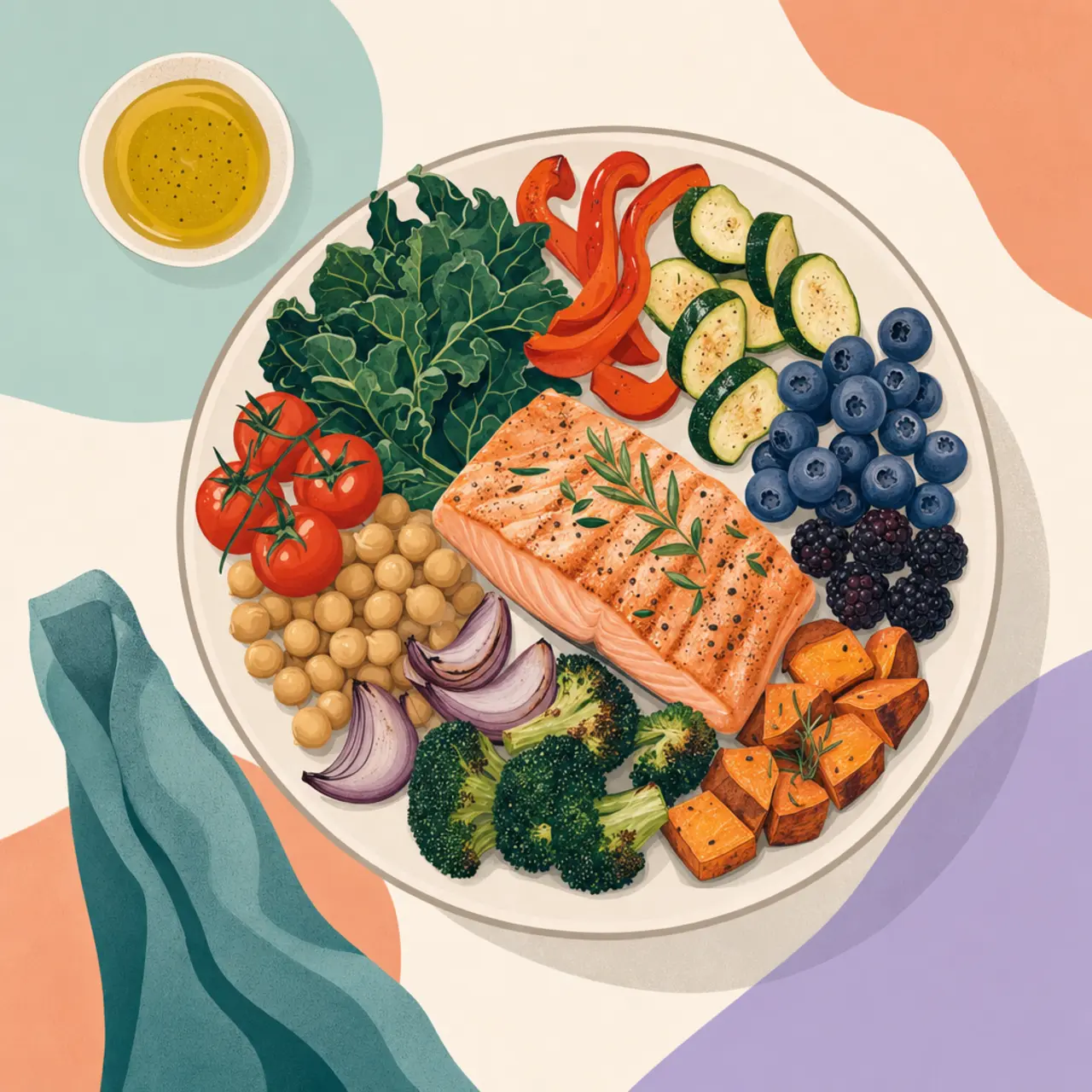
Vegetables, olive oil, fish, legumes, whole grains, berries. Gentle restriction, sustainable, ED-safer. A good starting point for most people.
Keto / low-carb
Very low carbohydrate. Some patients report significant pain and swelling relief. Stricter — may not suit everyone, especially anyone with disordered eating history.
RAD diet
The Rare Adipose Disorders diet — anti-inflammatory and lower-carb, designed specifically for fat disorders like lipedema. More structured than Mediterranean.
All three share a common foundation: less ultra-processed food, less added sugar, more whole foods, more anti-inflammatory fats. Where they differ is in how strictly they limit carbohydrates.
What foods tend to help — and which make symptoms worse?
| Generally helpful | Generally best limited |
|---|---|
| Oily fish (salmon, sardines, mackerel) | Added sugar and high-fructose corn syrup |
| Extra-virgin olive oil | Ultra-processed snacks and fast food |
| Colorful vegetables (especially leafy greens) | Excess salt / sodium |
| Berries and tart cherries | Alcohol (worsens fluid retention) |
| Nuts and seeds | Refined grains (white bread, pastry) |
| Legumes (beans, lentils) | Sugary drinks and juice |
What if I have a difficult relationship with food?
Many people with lipedema have a history of disordered eating
Years of being told to "just lose weight" — by doctors, family, and culture — takes a real toll. Restrictive diets can trigger or worsen disordered eating patterns. You are not obligated to follow any strict eating plan. If rigid rules around food feel harmful to you, that is valid and important information.
A non-restrictive approach that still supports inflammation reduction:
- Eat mostly whole foods — vegetables, fruit, fish, nuts, legumes, whole grains — without tracking or banning anything.
- Add more anti-inflammatory foods rather than removing foods you love.
- Focus on consistency over perfection. A mostly-whole-foods diet most of the time has real benefits.
- Work with a registered dietitian who understands lipedema and has training in eating disorders (HAES-aligned dietitians are a good fit).
- Consider gentle mindful eating practices instead of calorie counting or macros.
If you're struggling with food thoughts, restriction, or binge-restrict cycles, please reach out to a qualified professional. The NEDA Helpline (US) and Beat (UK) offer support.
Does exercise help lipedema?
Yes — but not in the way that's often implied. Exercise won't "work off" lipedema fat. What it does is reduce pain, ease stiffness, improve lymphatic flow, support cardiovascular health, and help with mood. Water-based exercise is especially valuable: the hydrostatic pressure of water acts as natural compression, supporting your legs while you move.
What are realistic expectations for weight and lipedema?
Diet and exercise can reduce the non-lipedema fat on your body and improve overall health markers. What they usually cannot do is shrink the lipedema tissue — the nodular, painful fat in your legs, hips, and sometimes arms. This isn't a failure of willpower or effort. It's the biology of the condition.
A realistic win
Anti-inflammatory eating + gentle consistent movement often produces: less daily pain, less end-of-day swelling, improved energy, and better-fitting clothes — even when the lipedema tissue itself hasn't changed size. Those are real, meaningful outcomes worth aiming for.
Sources
- Aday et al. — 707-patient US lipedema survey, Vascular Medicine 2024 pmc.ncbi.nlm.nih.gov
- Lipedema Foundation — Diet & Nutrition lipedema.org
- Herbst KL et al. — US Standard of Care, Phlebology 2021 journals.sagepub.com