Lipedema symptoms: the signs to look for
- Researched against current medical guidelines
- Every claim sourced & linked to a named authority
- Independent — we don’t sell surgery
- Not a substitute for your doctor.
The main signs of lipedema are symmetrical, disproportionate fat in the legs (and often arms) that is painful or tender, bruises easily, feels nodular under the skin, spares the hands and feet, and resists diet and exercise. Symptoms often start or worsen at puberty, pregnancy, or menopause.
On this page
What are the 10 hallmark signs of lipedema?
These ten signs are recognized across the leading clinical references, including the US Standard of Care (Herbst et al., 2021) and the Delphi Consensus (2026). No single sign is diagnostic on its own — it's the pattern that matters.
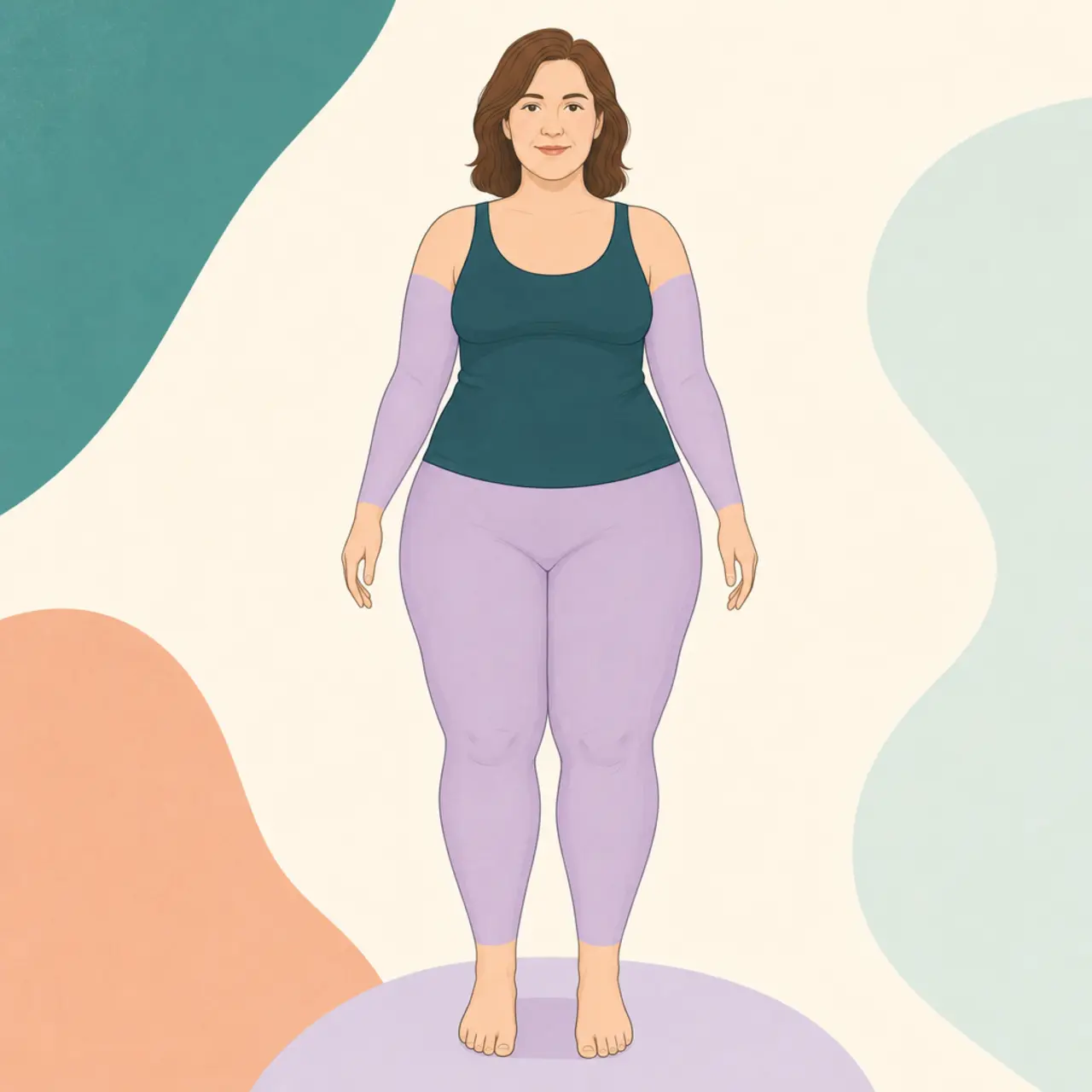
- 1 Symmetrical fat distribution. Both legs (and often both arms) are affected equally — if only one side is enlarged, another cause is more likely.
- 2 Disproportionate body shape. The lower half — hips, thighs, legs — is noticeably larger than the upper body, even when overall weight is in a healthy range.
- 3 Pain and tenderness to touch. The affected tissue hurts when pressed, rubbed, or even lightly bumped. Ordinary fat does not hurt.
- 4 Easy bruising. Small blood vessels in lipedema tissue are fragile — bruises appear after minor bumps, sometimes with no memory of an injury.
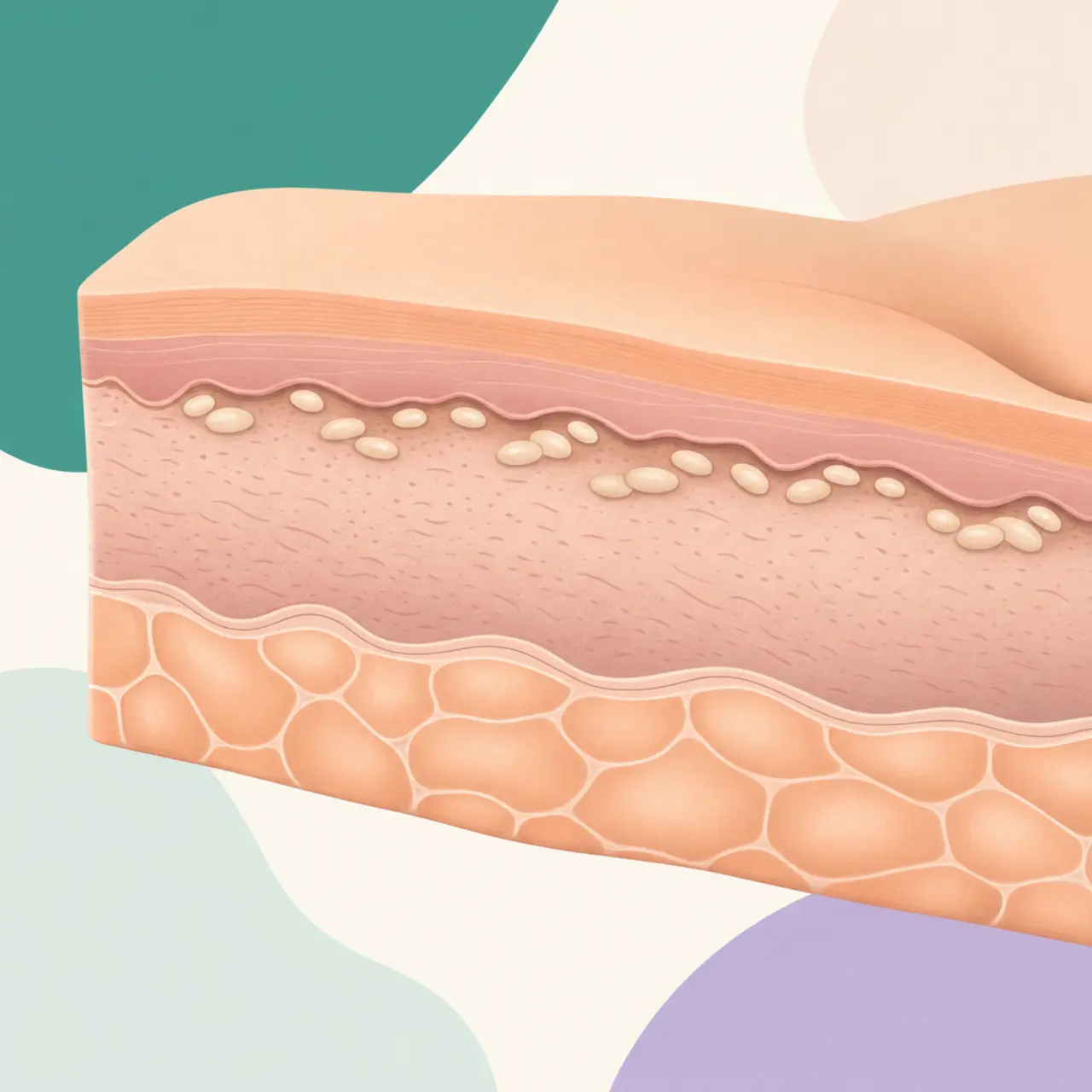
- 5 Nodular texture. Under the skin the tissue feels lumpy — like rice, peas, or beans in a bag. This is a key distinguishing feature from ordinary fat.
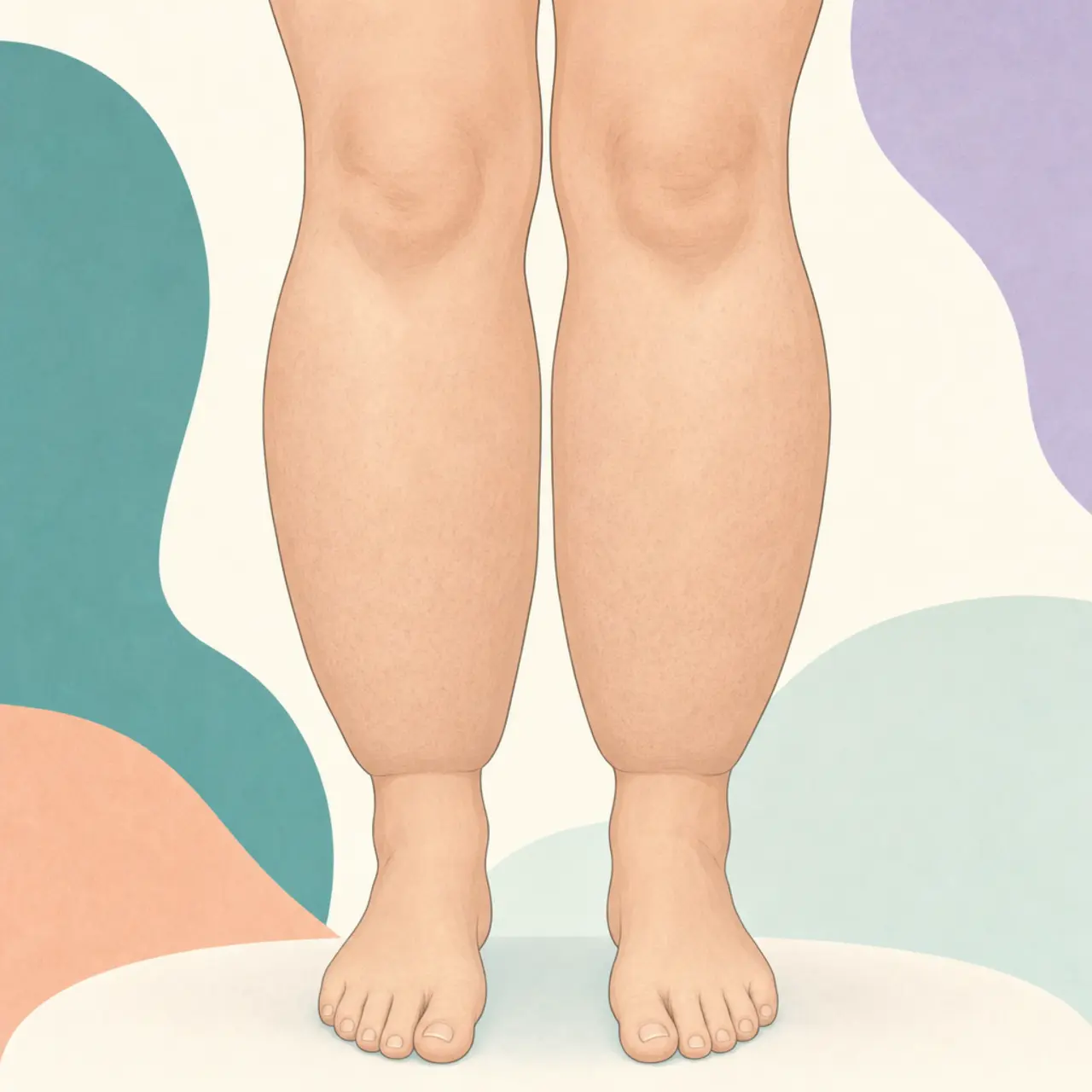
- 6 The cuff sign (ankle or wrist). The abnormal fat stops abruptly at the ankle, leaving the foot normal-sized. A visible "step" or bracelet-like indentation forms at the ankle. The same pattern can appear at the wrist in arm involvement.
- 7 Heaviness and aching. Legs feel heavy, especially in the afternoon, in warm weather, or after standing. Many people describe restless legs at night.
- 8 Diet-resistant fat. Even with significant calorie restriction or weight loss, the fat in the affected limbs does not reduce proportionally. The upper body may slim while the legs stay the same.
- 9 Hormonal-timing onset. Symptoms typically begin or worsen at puberty, pregnancy, or perimenopause — times of significant hormonal change.
- 10 Family history. Lipedema runs in families. Many people discover a mother, aunt, or sister shares the same pattern once they know what to look for.
What does lipedema pain actually feel like?
Lipedema pain is different from sore muscles or joint pain. It lives in the fat tissue itself and is often described as:
- Tender to even light touch — a hug, a cat sitting on your lap, or the pressure of a seat belt can hurt.
- A deep ache or heaviness that builds through the day and eases when you lie down.
- Burning or throbbing in warm weather or after prolonged standing.
- Sensitivity to a blood pressure cuff inflated over the thigh — some people bruise from it.
- Restless, uncomfortable legs at night.
Fat isn't supposed to hurt — yours does, and that's a real, recognized medical symptom. You're not imagining it.
Where does lipedema affect the body?
Legs and thighs: The most common site. Fat accumulates from the hips down to the ankles, with the inner thighs and knees often most prominent. The knee area can develop a soft inner-knee pad that makes crossing legs uncomfortable.
Arms: The upper arms from shoulder to wrist — sometimes described as "batwings" — can be involved (Type IV lipedema), with the same tenderness, bruising, and cuff sign at the wrist that leaves the hands normal. Arm involvement often accompanies leg involvement. Learn more on the lipedema in arms page.
Hands and feet are spared. This is a critical distinguishing sign. If the swelling includes your feet and toes, a different diagnosis — such as lymphedema — is more likely.
When should you seek urgent care?
Seek urgent care for these symptoms
Sudden one-sided swelling — especially if it comes on quickly — or skin that is red, hot, painful, and accompanied by fever are warning signs of a possible blood clot (deep vein thrombosis) or skin infection (cellulitis). These need same-day medical evaluation. Lipedema is bilateral and gradual — sudden unilateral changes are not typical.
Could my symptoms be something other than lipedema?
Several conditions can look or feel similar. The most important to distinguish are lymphedema (fluid swelling, usually includes the feet), cellulite (painless cosmetic dimpling), and ordinary weight gain (proportionate, painless, diet-responsive).
Ready to see how many signs fit?
Our free symptom checker walks you through the hallmark signs one by one and gives you a plain-English summary to share with your doctor.
Sources
- Herbst KL et al. — US Standard of Care, Phlebology 2021 journals.sagepub.com
- Delphi Consensus on Lipedema — Nature Communications 2026 nature.com
- Aday et al. — US Patient Survey, Vascular Medicine 2024 pmc.ncbi.nlm.nih.gov